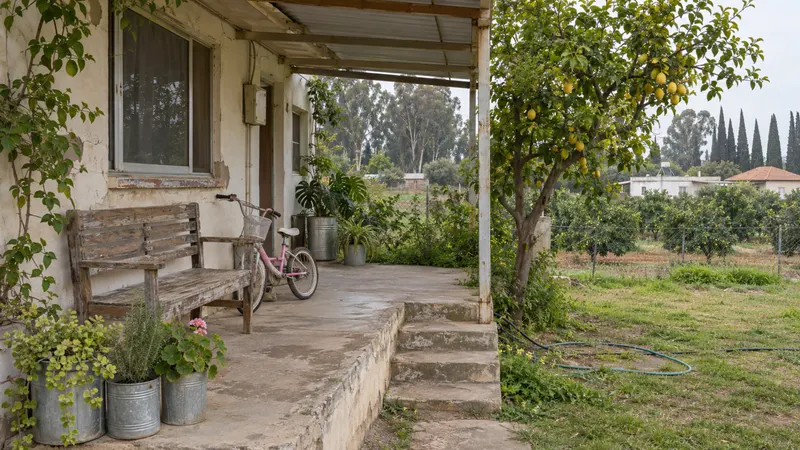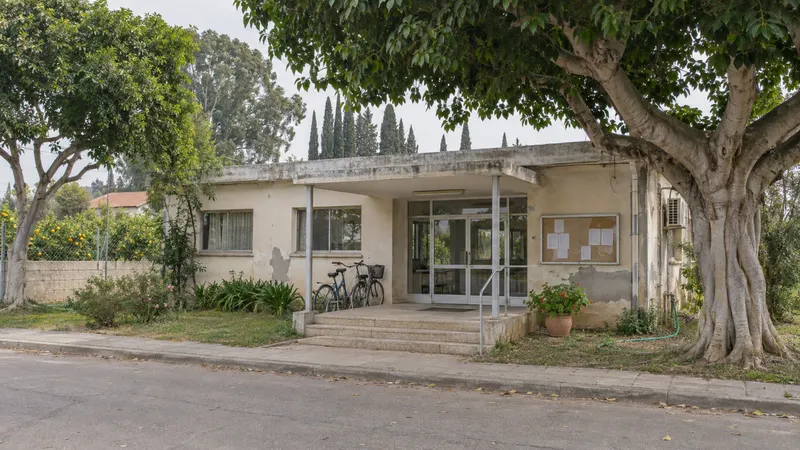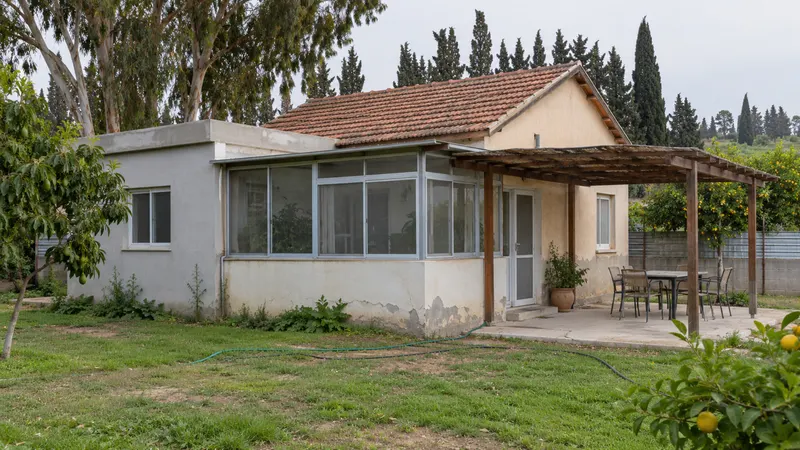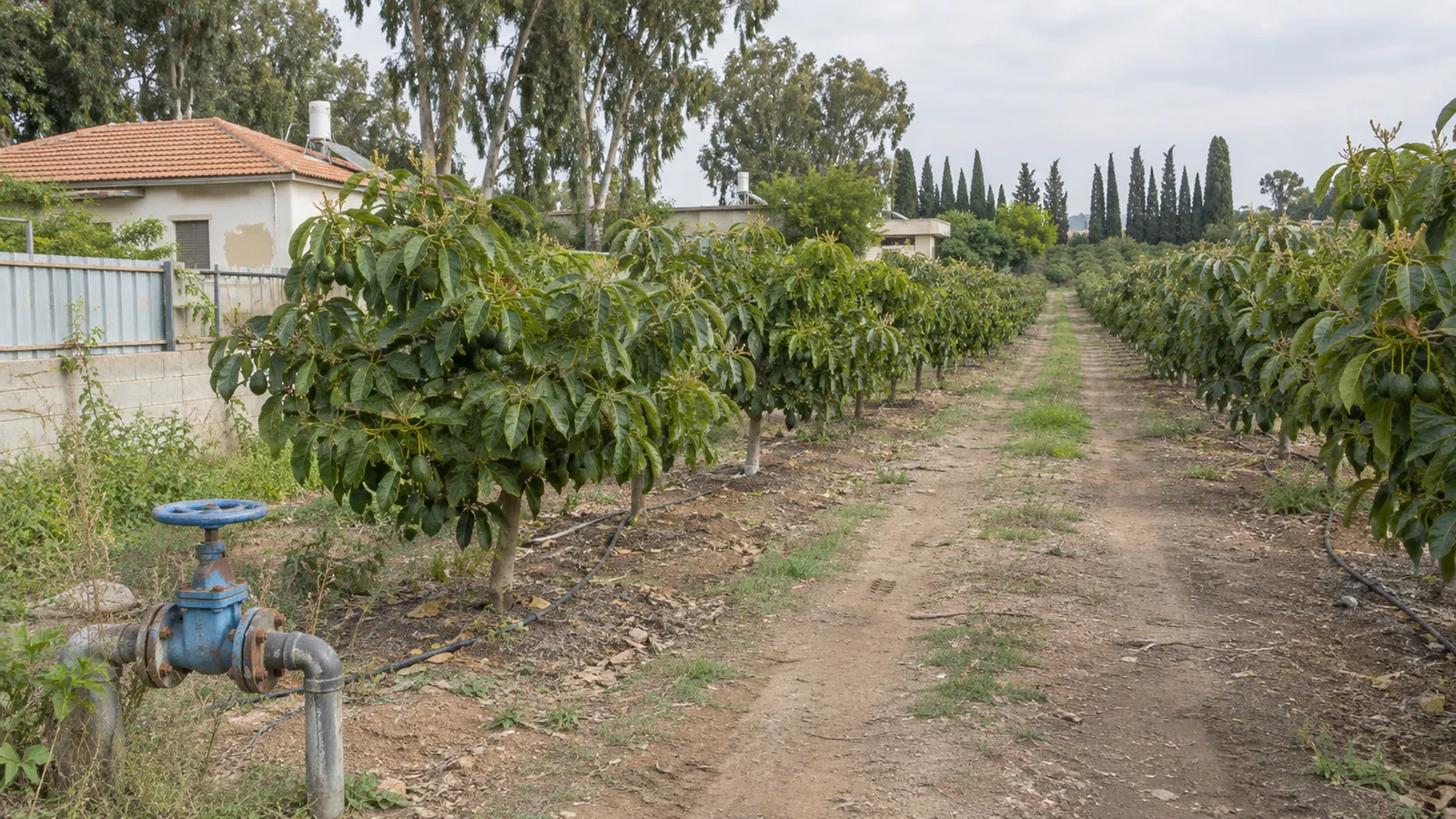
When a nahala (an agricultural family holding in a moshav, a cooperative farming village) is sold, two main payments are made to the Israel Land Authority (Rashut Mekarke'ei Yisrael, RMI): purchase fees (dmei rechisha) for the residential plot, and consent fees (dmei haskama) for the rest of the holding. Both are conditions of the transfer of rights, and both are set in the Israel Land Council decisions compendium (Kovetz Hachlatot Mo'etzet Mekarke'ei Yisrael), sub-chapter 8.3 (long-term leases to moshavim), part 7: anchoring residential rights in the residential plot of a nahala. Rates and section numbers follow the compendium text as amended up to 24 May 2026, read on 11 November 2026.
What is the residential plot, and why is the calculation built around it?
The compendium defines a nahala as agricultural land intended for a settler, for his home and for his livelihood from the farm. Plot A (helka alef) is the continuous area zoned in the plan for housing, farm buildings and cultivation. The residential plot (helkat ha-megurim) is, as a rule, a continuous area inside plot A of up to 2.5 dunams (a dunam is 1,000 square metres), zoned for housing in the plan, that includes the existing dwellings and any non-agricultural business use; in cases set in the decisions, the arrangement can also be applied to an additional area, on separate terms and for a separate payment.
What are purchase fees, and how much are they?
Under section 8.3.49 of the compendium, the full purchase fee rate is 33% of the land value of the residential plot as appraised by RMI, plus VAT as required by law, subject to the discounts, credits and exemptions that apply in the particular case. The value is set by an appraisal that reflects the approved building rights, the planning potential for low-rise housing, and the right to split lots off the residential plot.
- A holder who previously paid lease fees at 3.75% (see below) pays a completion of 29.25% under an updated appraisal, and 33% on the remaining rights not yet paid for.
- Discount for consent fees paid in the past: in a nahala whose rights were transferred in the past and consent fees were paid, purchase fees are 20% if the transfer agreement was signed on or after 1 January 1993. If it was signed earlier, 80% of the consent fees paid, with indexation, are set off. Within the reduction for consent fees paid in the past, purchase fees are not less than 20% of the value of the residential plot, subject to the regional discounts and to special exemption provisions, where they apply.
- Regional discount: under the table in section 8.3.54, instead of 33% the rate is 13.71% in national priority area A and 20.14% in national priority area B, subject to limits. A different arrangement applies in the confrontation-line area.
What the payment buys: all residential rights in low-rise construction, existing and future, in the residential plot. A holder who has bought them is exempt from further payment to RMI for low-rise residential construction in the residential plot, subject to a plan, and may rent out or split the built dwellings even to non-relatives.
What are consent fees, and what do they apply to today?
The compendium defines consent fees as a payment the lessee owes the Authority for the rise in land value of a non-capitalised property, when asking to transfer rights.
Under section 8.3.50, a holder who has paid purchase fees is exempt from consent fees for the residential plot, but RMI continues to charge consent fees for the parts of the nahala that are not the residential plot. The calculation: one third of the calculated value of the agricultural land of the nahala, under the mechanism set out below, plus VAT as required by law. The value is the number of agricultural dunams, as reported by the moshav's cooperative association, multiplied by the value of an agricultural dunam that the compendium fixes as compensation for a dunam of unirrigated crops (part 2 of sub-chapter 8.18). No regional discount applies to this payment.
There is another route: a lessee who holds a contract in force and insists on its continued application, or who asks to exercise an entitlement to renew an earlier contract on its terms, goes on paying consent fees under Council Decision 534, although that decision has been repealed, subject to the terms of the arrangement. In that case purchase fees are not paid and the part 7 arrangement does not apply.
What does capitalisation mean in a nahala?
In the compendium, capitalisation (hivun) is the advance payment of annual lease fees for the lease period or the rest of it. Part 7 has two payment levels for the residential plot:
- 3.75% of the land value of the residential plot (section 8.3.46): the payment that brings the holder into the arrangement, for the basic residential building scope of up to 375 square metres. No regional discount applies to it. For a holder who has paid only this level, residential building beyond 375 square metres requires capitalised lease fees at 91% (section 8.3.47).
- 33%: the full purchase fees described above.
In the market a nahala is commonly called capitalised (mehuvenet) when the payment for the residential plot has already been made. The compendium does not use the term in that sense, so in each deal its meaning depends on which payment was actually made, according to RMI's confirmations.
When are the payments made, and who makes them?
Under section 8.3.50(b)(1), when the rights in the whole nahala are transferred, the lessee, that is the seller, is required to pay purchase fees, or a completion of purchase fees depending on payments made in the past, for all residential rights in the residential plot, whether or not he joined the arrangement earlier. The payment is a condition of the transfer.
Some related rules:
- A nahala is transferred as a single farm unit; however, a residential lot can be split off it, subject to a plan that allows it and to RMI's conditions.
- A transfer of rights is carried out with the consent of the moshav's cooperative association. In exceptional cases RMI may act without that consent, if in the Authority's view the refusal rests on unreasonable considerations.
What do gross and net prices mean?
These are market terms, not terms from the compendium. At a gross price (bruto) the seller pays the charges that fall on him, including the payments to RMI and his own taxes, out of the price. The seller's net proceeds are the amount left to the seller after deducting the charges that fall on him. In a net deal (iska neto), the parties agree that the seller will receive a set amount, and the buyer will bear, in addition, the payments expressly defined in the contract.
The difference between the two prices is not known exactly in advance, because purchase fees are set by an appraisal of the residential plot. The liability towards RMI stays as the compendium sets it, and the economic split between the parties is set in the sale contract.
What is not included in the payments to RMI?
Capital gains tax on real estate (mas shevach) and purchase tax (mas rechisha) are paid to the Israel Tax Authority, and betterment levy (hetel hashbacha) to the local planning and building committee. Non-agricultural business use in the residential plot is charged separately, under sub-chapter 8.9 of the compendium.
RMI services on gov.il, in Hebrew: transfer of rights in the agricultural sector and advance information on the amount of the payments. The official text of the compendium is published on the RMI website.