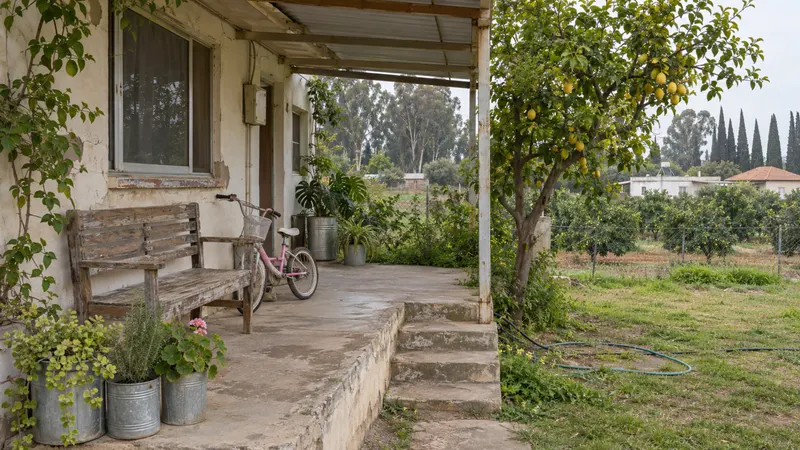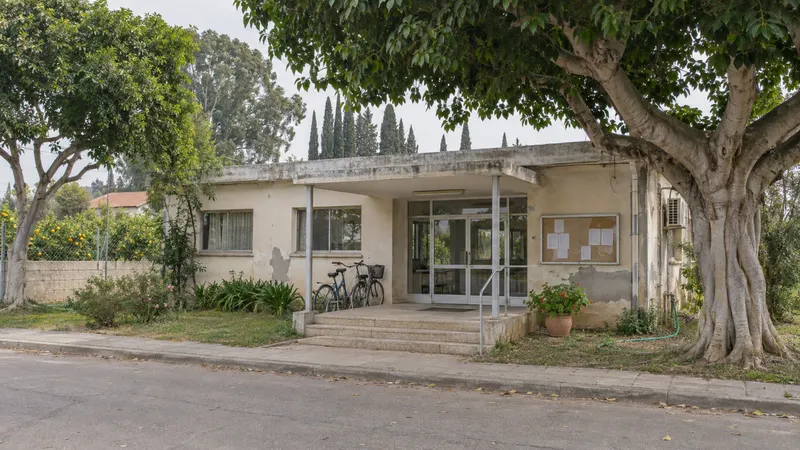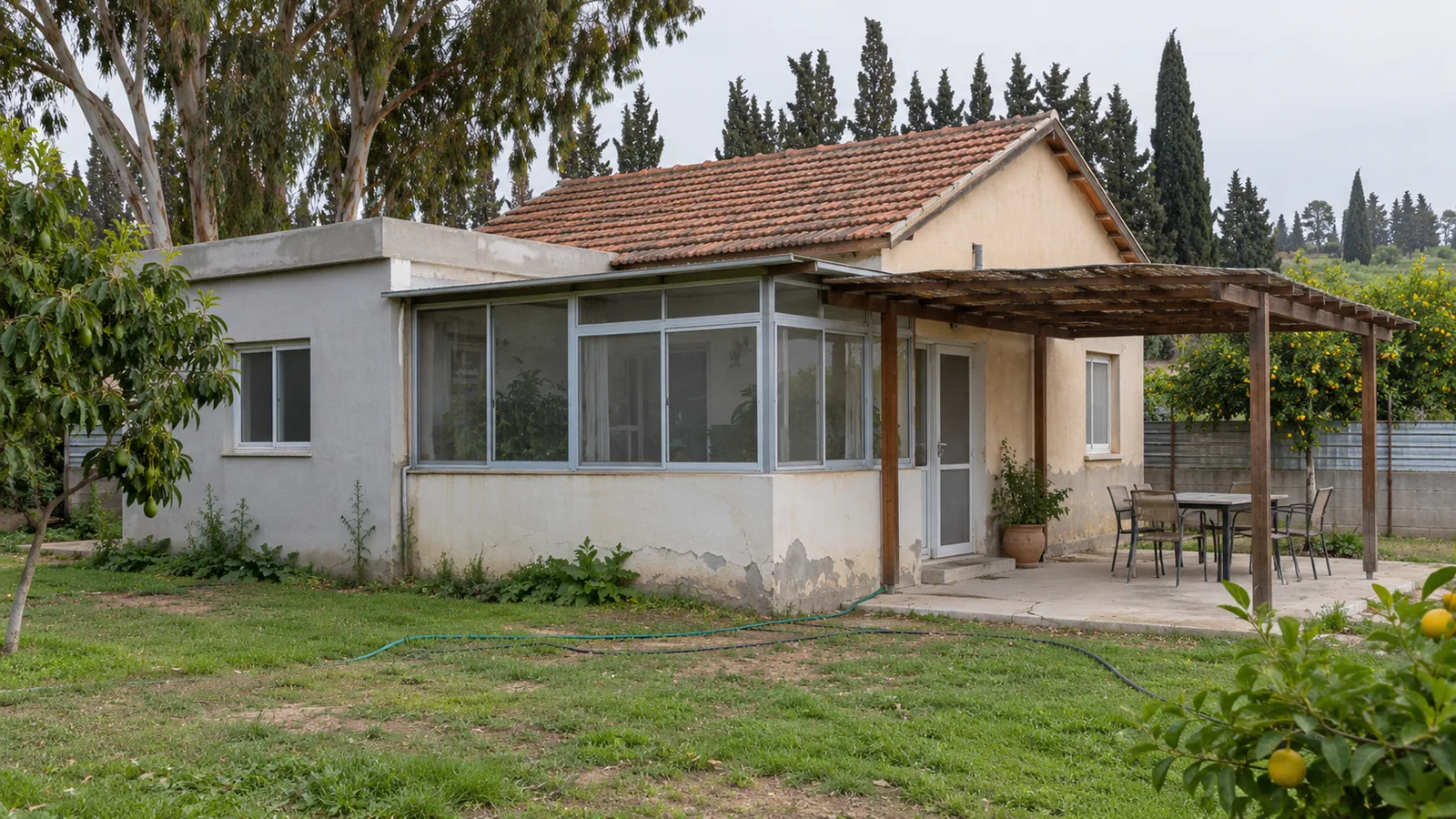
A distinction has to be drawn between building or use contrary to the planning and building laws and building or use that does not match the agreement with the Israel Land Authority (RMI); in a nahala (an agricultural family holding in a moshav) the two levels have to be checked separately. Two authorities examine building deviations (chrigot bniya), each separately: the local planning and building committee enforces the Planning and Building Law, and RMI, as owner of the land, approves a transfer of rights in a nahala only after all unregularised uses have been regularised. This reflects the Law, the Israel Land Council decisions compendium and RMI procedures as checked in November 2026.
What counts as a building deviation or a deviating use
On the planning side, the Planning and Building Law uses three terms:
- Prohibited work (avoda asura): building or work that requires a permit and was done without one or contrary to its terms (section 203).
- Prohibited use (shimush asur): a use that requires a permit and takes place without one or contrary to it, a use contrary to a plan, or use of something built by prohibited work.
- Deviating use (shimush choreg): use for a purpose not allowed in the plan or the permit. A deviating use requires a lawful permit; a permit for a use that deviates from a plan is given for a period limited in advance, and subject to the limits in the Law, including the prohibition on permitting a significant deviation.
On RMI's side, Procedure 90.07B defines an unauthorised use as a use not allowed under the terms of the agreement with the rights holder. Under section 8.3.17 of the compendium, any change in the type of use, any building and any addition to an existing building require RMI's prior written approval. A building can therefore have a permit yet be unregularised with RMI, and the reverse.
Possible examples of breaches in a nahala are business activity without the required RMI approvals, exceeding the area or location approved for non-agricultural business use, and more dwellings than allowed; earlier approvals and transactions should also be checked, as they may allow exceptions to the usual rules. In certain cases RMI recognises earlier approved transactions even beyond 500 square metres or outside the residential plot.
How are deviations discovered
- The building file (tik binyan) at the local committee. It holds the building permits and signed plans, which are compared with what is actually built.
- The property file at RMI. It holds the contract, approved transactions, notes on unregularised uses and inspection reports. An inspection report sets out the nature of the breach, its location, area, extent of building and period (also from earlier aerial photographs), and whether a building permit exists. On an application to transfer rights RMI orders an inspection report, except in a transfer by inheritance or under a divorce agreement.
- An as-built survey map (mapat medida matzavit). It marks the buildings and states the use of each, and RMI relies on it to determine areas.
Why it matters to the local committee and why to RMI
The local committee is responsible for building and use taking place only under a permit and a plan (section 145 of the Law). Its tools, and those of the enforcement authorities:
- An administrative demolition order, as long as the work is not finished or no more than six months have passed since it was finished. For a home: as long as it is not occupied or no more than 30 days have passed since it was occupied (section 221).
- A judicial demolition order even without criminal proceedings, including when the person who did the work cannot be punished because of limitation (section 239).
- Criminal proceedings. Prohibited work and prohibited use are strict-liability offences, punishable by up to two years in prison or a fine. For prohibited use, the person actually holding the land at the time of the offence can also be charged, and a further fine applies for each day the offence continues (section 243).
RMI acts as owner of the land. The contract defines which uses are allowed, and additional rights are paid for. A use that was not regularised is a breach of the contract, and RMI charges usage fees for it.
What happens to a transfer of rights when there are deviations
Every transfer of rights in a nahala requires RMI's consent (section 8.3.20 of the compendium). Under Procedure 37.02B, if there are unregularised uses on the land, the transfer is approved only after all uses have been regularised.
Regularisation is done in one of three ways: a transaction where the use can be approved, stopping the use, or removing it. Alongside regularisation, usage fees are charged for the past. Under Procedure 90.07B, in the version approved on 9 July 2026:
- The period is the actual period of use, and no more than seven years back from the warning letter or the approach to RMI.
- In an agreed regularisation the rate is 5% of the land value a year.
- If the breach was removed and the use lasted less than six months, no usage fees are charged.
- A use that was not regularised is referred for a claim for eviction or cessation of use and for full usage fees.
A different rule applies to a transfer to an heir: the heir undertakes by affidavit to regularise the use and the payment within a year. As a rule, a sale of a nahala requires payment of purchase fees (dmei rechisha), or a top-up of purchase fees, for the residential plot, depending on earlier payments and subject to exceptions. Joining the residential-plot arrangement is likewise conditional on regularising and paying for all uses on the nahala (sections 8.3.42 and 8.3.50).
Regularisation with RMI is not planning approval. Procedure 37.04B provides that approval of a transaction is not confirmation that the buildings were built with a permit, and that the duty to regularise a building without a permit lies with the rights holder.
What does the contract between buyer and seller usually address
This mechanism raises several questions that a sale agreement for a nahala or a moshav house has to settle:
- What the seller declares about permits, RMI transactions and unregularised uses, and which documents were given to the buyer.
- Who regularises each deviation, by which route (permit, transaction, stopping the use or demolition) and on what timetable.
- Who bears the usage fees for the past and the regularisation payments.
- Whether the deal or part of the payments is conditional on RMI's consent to the transfer.
- What happens if regularisation is delayed or fails.
What about a house in a moshav expansion that is not a nahala
The Planning and Building Law applies equally to a house in a moshav expansion (harchava). The RMI rules described here concern nahalot; for an expansion plot, the plot's lease governs.