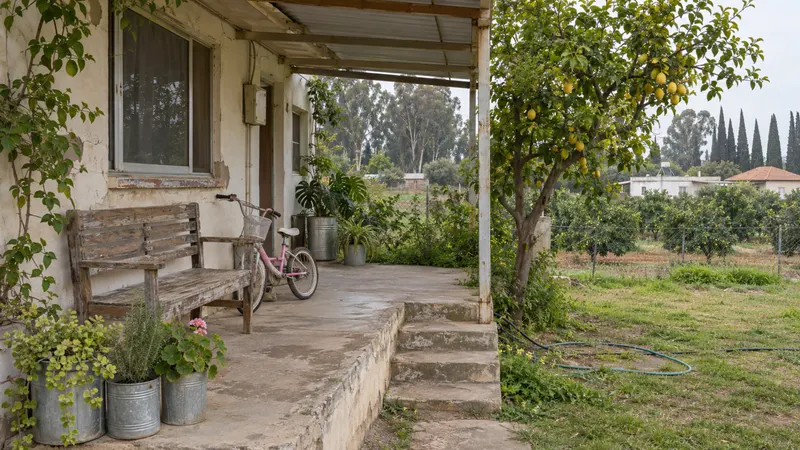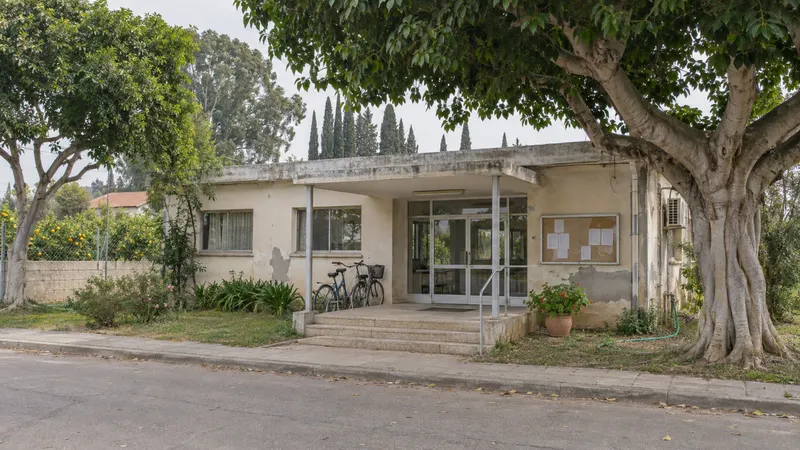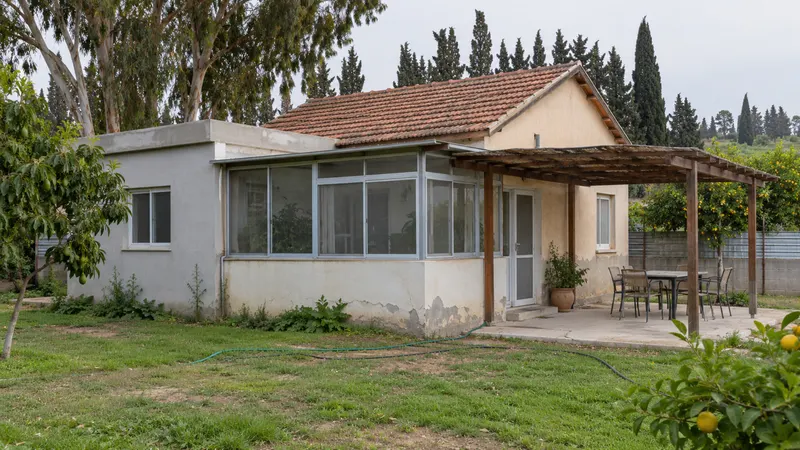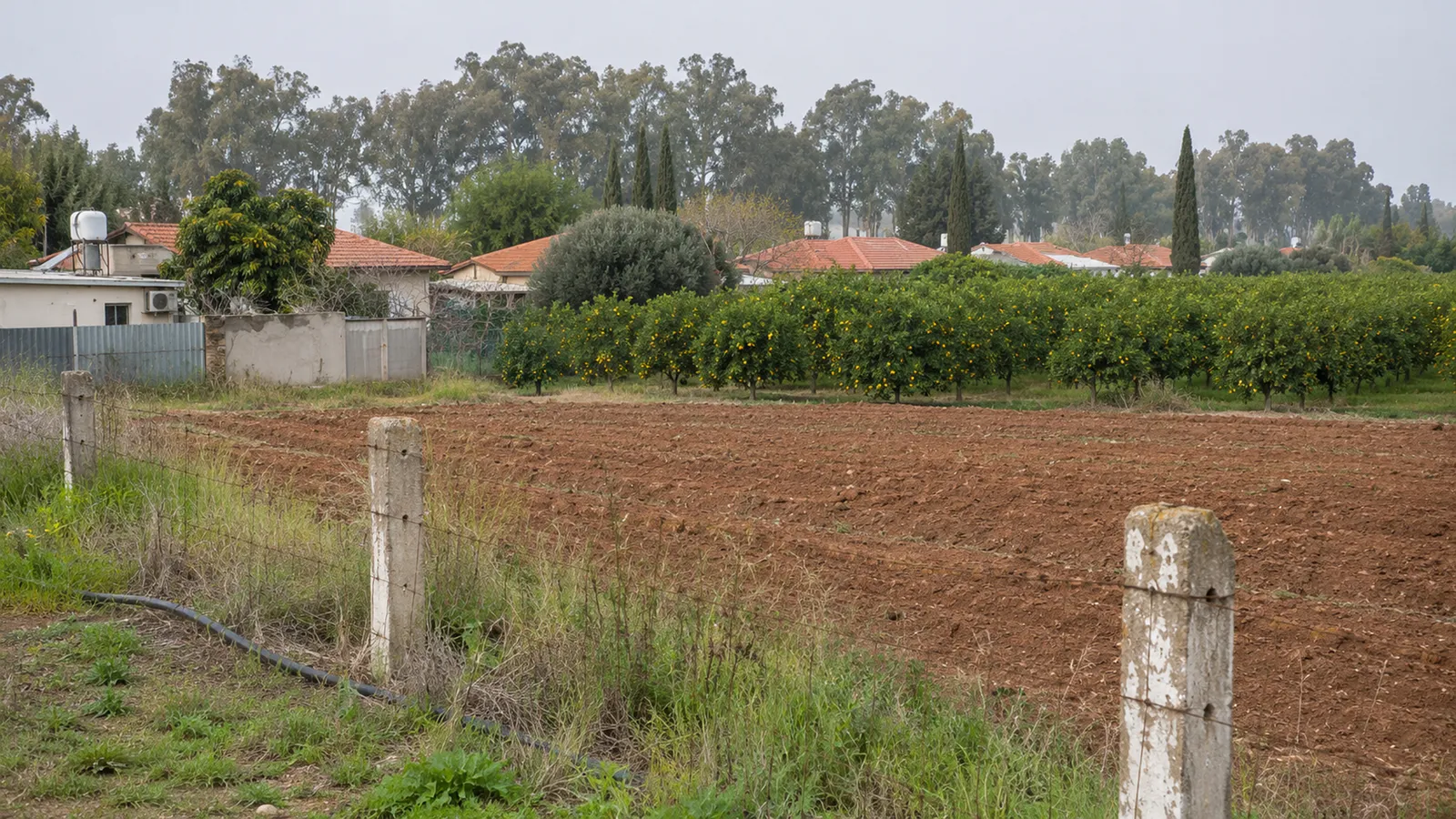
As of November 2026, nahalot in the Sharon and Emek Hefer were offered for sale at asking prices of between ILS 7.3 million and ILS 60 million. A nahala is an agricultural family holding in a moshav, a cooperative farming village. The range is wide because a nahala is not a uniform product: two holdings of the same size can differ in the houses on them, the building rights, the payments already made to the Israel Land Authority (Rashut Mekarke'ei Yisrael, RMI), and the location.
How much does a nahala cost in the Sharon and Emek Hefer?
The table shows asking prices published by the agency's office, as of November 2026. These are prices sellers asked for, not prices at which deals closed. A dunam is 1,000 square metres.
| Moshav | Size of the nahala | Built area and rights | Asking price |
|---|---|---|---|
| Bnei Zion | 25 dunams | 665 sqm house | ILS 60,000,000 |
| Sde Warburg | 7 dunams | 450 sqm house | ILS 33,000,000 |
| Sde Warburg | 8 dunams | 500 sqm house | ILS 30,000,000 |
| Mishmeret | 28.6 dunams | Rights for three houses | ILS 30,000,000 |
| Neve Yarak | 24.5 dunams | Old houses | ILS 18,000,000 |
| Beit Yehoshua | 9 dunams | 100 sqm house | ILS 13,000,000 |
| Be'erotayim | 25 dunams | 180 sqm house | ILS 12,900,000 |
| Be'erotayim | 25 dunams | Old 90 sqm house | ILS 7,300,000 |
Eight asking prices are a small sample. An average of the asking prices in the table can be calculated, but it should not be seen as a representative average price for nahalot in the area; nor is a price per dunam a sufficient basis for comparison, and the data do not show at what prices deals closed. The table also does not state whether each price is gross or net (see below), so the prices are not necessarily on the same basis.
What the table does show: a 7-dunam nahala in Sde Warburg was offered at more than four times the price of a 25-dunam nahala in Be'erotayim, and two 25-dunam holdings in the same moshav, Be'erotayim, were offered at ILS 12.9 million and ILS 7.3 million for a net deal. The size of the land alone does not explain the price.
How do the size and continuity of the land affect the price?
Under the Israel Land Council decisions compendium, a nahala is agricultural land of a size set by the Minister of Agriculture, intended for a settler for his home and his livelihood from the farm. It is made up of plot A (helka alef), a continuous area zoned in the plan for housing, farm buildings and cultivation, and of further plots intended for agricultural use only, which are not necessarily next to the house.
Inside plot A the residential plot (helkat ha-megurim) is defined: a continuous area of up to 2.5 dunams, zoned for housing in the plan. Residential building is allowed only there. As a rule, the nahala is transferred as a single farm unit, and rights in part of its area may not be transferred separately; however, a building lot can be split off, subject to a plan and to RMI's conditions.
It follows that the total area of a nahala measures mostly agricultural land, and that a considerable part of the value is concentrated in the residential plot.
What difference does it make whether the residential plot is capitalised?
Under section 8.3.49 of the compendium, the full rate of purchase fees (dmei rechisha) is 33% of the land value of the residential plot as appraised by RMI, plus VAT as required by law, subject to discounts, credits for earlier payments and exemptions that apply in the specific case. When the rights in the whole nahala are transferred, this payment is a condition of the transfer (section 8.3.50).
There is therefore a difference between a nahala on which the payment has already been made, commonly called capitalised (mehuvenet) in the market, and one on which the payment is still ahead: in the second, part of the proceeds will go to RMI at the time of the sale.
How do building rights and existing houses affect the price?
The compendium sets several reference points:
- The basic residential building scope in the residential plot is up to 375 square metres, subject to a plan (section 8.3.45). Building beyond that requires capitalised lease fees at 91%, unless all the rights have been bought (sections 8.3.47 and 8.3.49).
- The number of dwellings and buildings is set by the plan in force.
- Splitting a building lot off the residential plot is possible subject to a plan and to RMI's conditions; the payment is set according to the rights already bought, and no further payment to RMI is required for residential rights that have already been bought in full. An existing dwelling under a plan, with total building rights of at least 160 square metres, that is actually the lessee's home, will remain attached to the nahala and cannot be split off from it (section 8.3.48).
In the table this shows in the difference between a nahala with a 665 square metre house, a nahala with rights for three houses, and a nahala with an old 90 square metre house.
What is PLH potential, and on what conditions?
PLH (pe'ilut lo hakla'it, non-agricultural activity) is called non-agricultural business use (ta'asuka lo hakla'it) in the compendium (sub-chapter 8.9). RMI permits it in the residential plot on conditions, including:
- The use was approved in a plan or in a valid permit for a non-conforming use.
- As a rule, the total built area for non-agricultural business use is limited to 500 square metres, subject to the rules for calculating the quota and to exceptions concerning earlier transactions approved by RMI.
- The building rights for business use remain an inseparable part of the nahala.
- For a use under a valid plan, capitalised lease fees of 91% of the land value are charged, with the option of offsetting betterment levy paid for the requested use, subject to conditions and to a payment floor of 46%; for a use under a non-conforming use permit, use fees of 5% of the land value are charged in advance for each year of permission.
There is therefore a difference between a regularised use that has been paid for, potential that has not yet been realised, and an unregularised use.
Why do the moshav and the regional council matter?
The plan that applies to the nahala sets how many dwellings and buildings can be built and whether a lot can be split, and it differs from one locality to another. A moshav belongs to a regional council (mo'atza ezorit), the local government of a rural area. The table shows large gaps between localities even for holdings of similar size. The sample is too small to quantify the effect of location.
Why does it matter whether the price is gross or net?
These are market terms. At a gross price (bruto) the seller pays, out of the proceeds, the charges that fall on him, including the payments to RMI and his own taxes. In a net deal (neto) the seller receives an agreed amount, and the buyer additionally bears the payments expressly defined in the contract; it should therefore be established which taxes and payments are included in the agreement. Two identical asking prices can therefore represent a different total cost to the buyer, and comparing holdings requires the same basis.
Where can transaction prices be checked?
Data on transactions reported to the Israel Tax Authority is published in the Tax Authority's real estate information database and on the government real estate website, both in Hebrew.