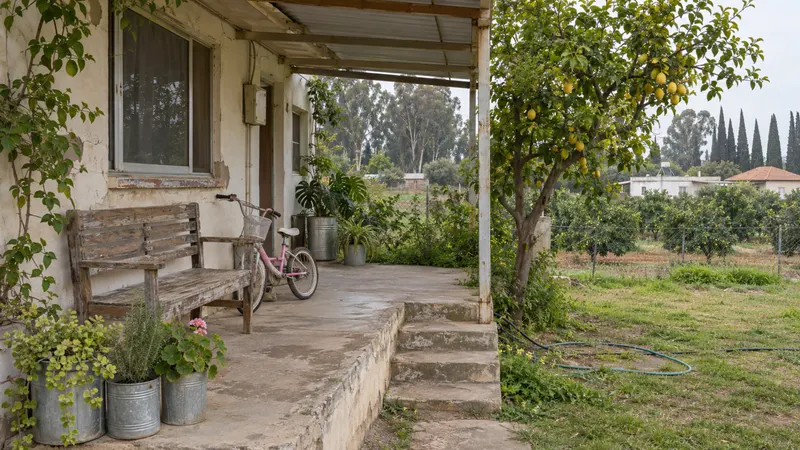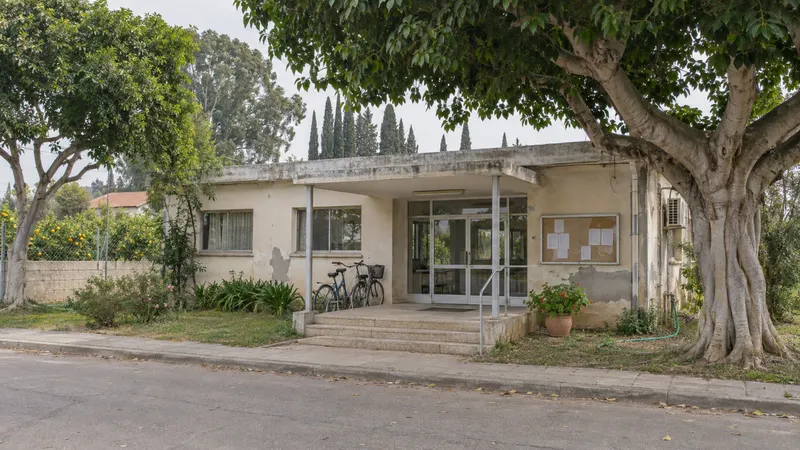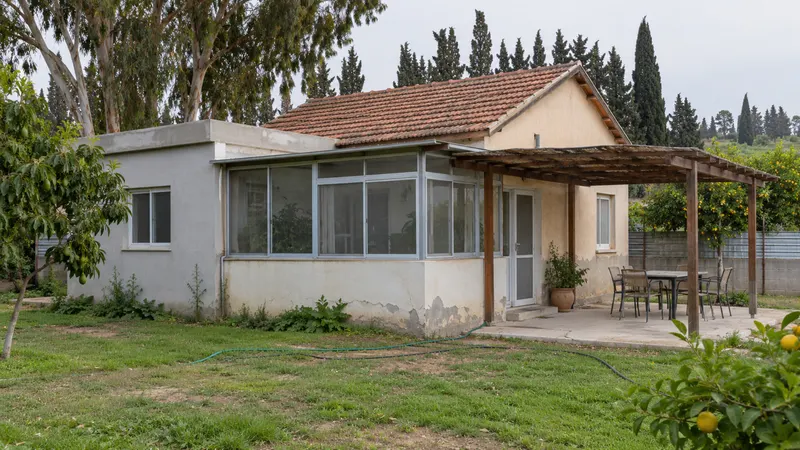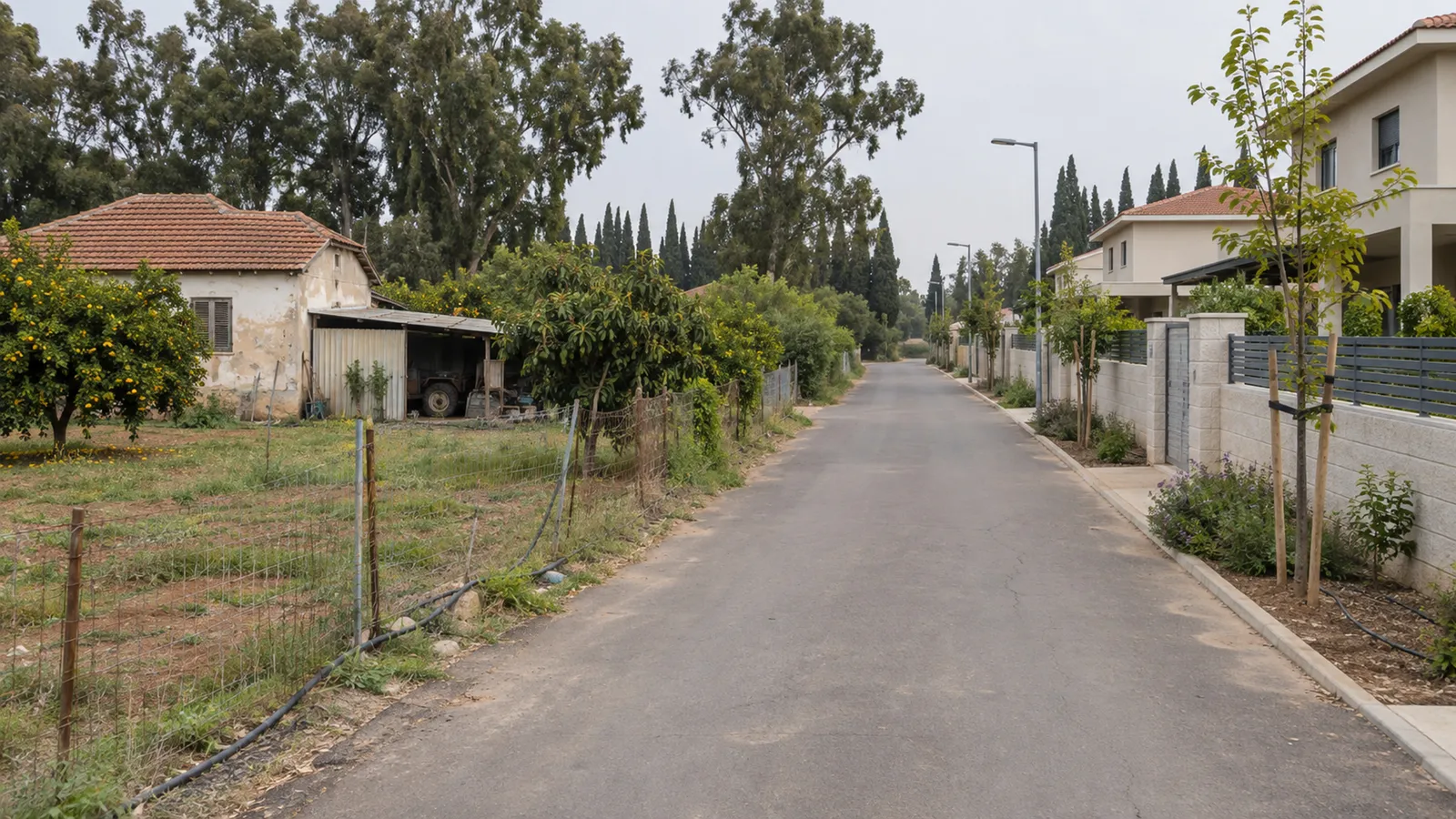
All three are found in the same moshav, but they differ in the land, the rights and how they are bought. A nahala is a complete farm holding; a meshek ezer is land for a home and cultivation that is not a nahala; a house in an expansion is a residential plot only. It concerns property on Israel Lands (state-administered land) and reflects the Israel Land Council's decisions compendium as in force from 4 August 2026.
What does each of the three consist of?
Nahala (נחלה) – agricultural land of a size set by the Minister of Agriculture, intended for a settler's home and livelihood from the farm. It includes chelka alef (plot A: residence, farm buildings and cultivation), within it a residential plot of, as a rule, up to 2.5 dunams (the dunam is Israel's land unit), and farmland. A nahala is a single farm unit; however, a residential plot can be split from it, subject to the plan and to the Israel Land Authority's conditions.
Meshek ezer (משק עזר, auxiliary farm) – under the compendium, land leased or handed over as an auxiliary farm, comprising residence and cultivation, provided it is not a nahala. Its rules refer to a continuous area of up to 2 dunams in which capitalised rights can be purchased.
A house in a harchava (הרחבה, expansion) – an expansion is land in the mishbetzet (the land allotment held by the cooperative association) of an agricultural community that has been rezoned for housing. The plots are removed from the association's mishbetzet, and the person receiving a plot contracts directly with the Israel Land Authority (RMI). It includes no farmland.
Comparison table
| Subject | Nahala | Meshek ezer | Expansion house |
|---|---|---|---|
| The land | Chelka alef and farmland | Residence and cultivation | A residential plot only |
| The contract | Long lease of chelka alef (four periods of 49 years) or bar reshut (licensee) status | Meshek ezer lease; with capitalised rights – 49 years | Development agreement, then a 49-year lease renewable for a further 49 years |
| The association | As a rule, the moshav association's written consent, subject to exceptions in the Council's decisions | The association's consent to removal from the mishbetzet, if the farm is included in it | Admission committee in communities the law applies to; tender elsewhere |
| Residential building | The number of units and the building scope depend on the plan and on the rights track at RMI; under the anchoring arrangement the basic building scope is 375 m², and further rights can be purchased | Per the applicable zoning plan; varies by moshav | Per the applicable zoning plan; varies by moshav |
| Payment to RMI on transfer | Purchase fees, or a top-up of purchase fees, for the residential plot, depending on earlier payments and the discounts that apply, and consent fees for the rest of the agricultural area | Capitalised – no consent fees; not capitalised – consent fees | Depends on the allocation date and the time since construction was completed |
How do the rights in the land differ?
In a nahala, the right is a long lease or bar reshut status. It is subject to a duty to live there and cultivate, to a ban on holding more than one nahala, and to a provision allowing RMI to end the lease for a rezoned part, against compensation. A holder who has joined the arrangement for anchoring residential rights is not subject to that provision in the residential plot.
In a meshek ezer, the holder may keep the existing rights unchanged and pay annual lease fees, or purchase capitalised rights in a continuous area of up to 2 dunams. The original contract continues to apply to any area beyond that, including the duty to return the land to RMI when a plan changing its zoning is approved.
In an expansion, the right is a lease of a residential plot. The capitalised lease fees are paid in full at allocation, and the land value is set for the full building rights in the plan in force.
Does the buyer have to be accepted by the association?
For a nahala – the transfer of rights requires RMI's consent and, as a rule, also the written consent of the moshav association (agudah), subject to exceptions in the Council's decisions.
For a meshek ezer – the compendium does not make the transfer conditional on membership of the association. Where the meshek ezer is included in the mishbetzet agreement, the transfer requires a direct lease with the buyer and removal of the area from the mishbetzet, with the association's consent. That consent may not be made conditional on payment.
For an expansion – the buyer receives no rights in a nahala. In communities covered by sections 6B to 6H of the Cooperative Societies Ordinance, allocating a plot and transferring rights in it require approval by an admission committee (vaadat kabala). Elsewhere, expansion plots are marketed by RMI by tender.
What can be built?
On a nahala, residential building is allowed only in the area of chelka alef zoned for residence, within the scope shown in the table.
For all three, building is subject to the town building plan (taba) that applies to the land.
How is each one bought?
A nahala is bought from the right-holder, with RMI's consent and, as a rule, the written consent of the moshav association. The transferring lessee must pay purchase fees (dmei rechisha), or a top-up of purchase fees, for the residential plot, depending on earlier payments and the discounts that apply, and consent fees (dmei haskama) for the rest of the agricultural area.
A meshek ezer is bought from the holder through a transfer of rights at RMI. A capitalised meshek ezer carries no consent fees; for one that is not capitalised, consent fees are paid and the annual lease fee is updated to 1% of the appraisal.
A new plot in an expansion is allocated by RMI: exempt from tender on the basis of an admission committee's approval in communities covered by the Ordinance, and by tender elsewhere. A tender-exempt allocation is made only to individuals over 18 who do not hold a right in a nahala, are not kibbutz members and do not hold rights in a meshek ezer or in a residential plot allocated exempt from tender.
An existing house in an expansion is bought from the holder through a transfer of rights. For allocations under sub-chapter 8.6 from 2 November 2025, the holder must live in the property for 5 years from completion of construction, and rights cannot be transferred until 7 years from that date, apart from exceptions. For tender-exempt allocations approved from 28 October 2018 until then, an unrestricted transfer without further payment is possible 5 years after construction is completed.
These are general rules. The rights and duties of a particular property are set by its contract, its planning scheme and the documents of RMI and the association.