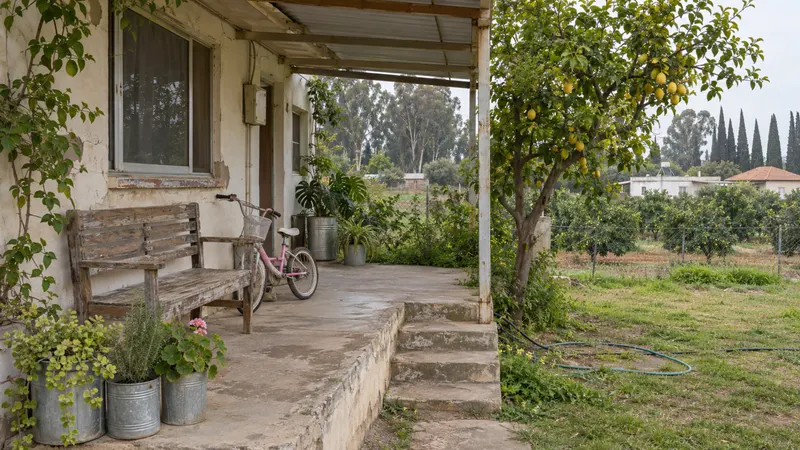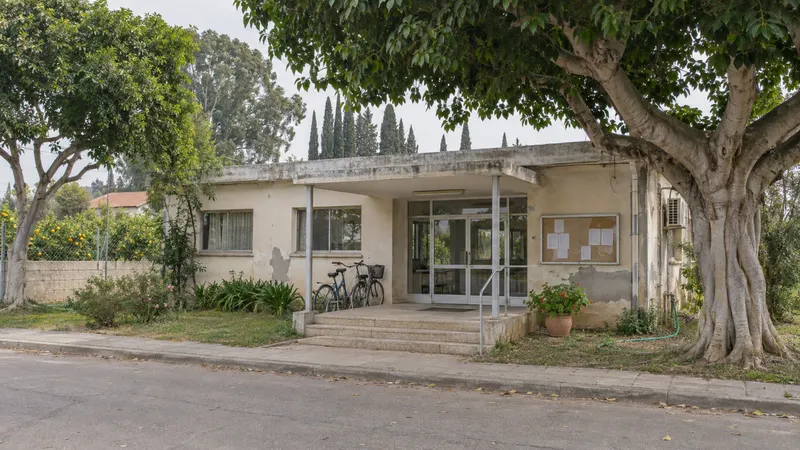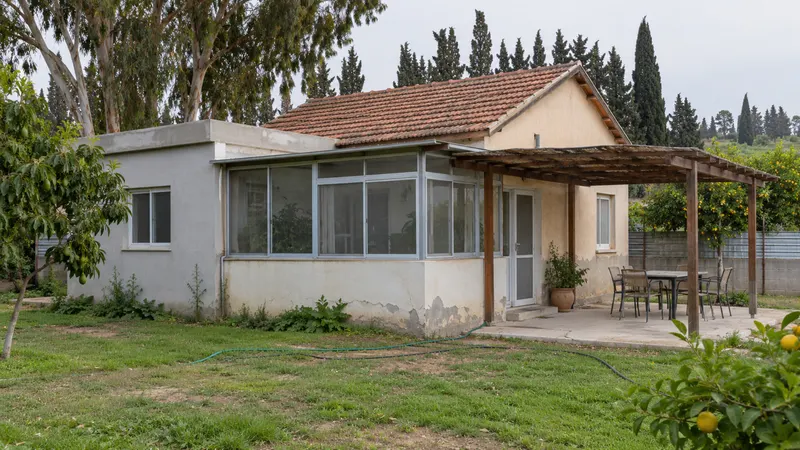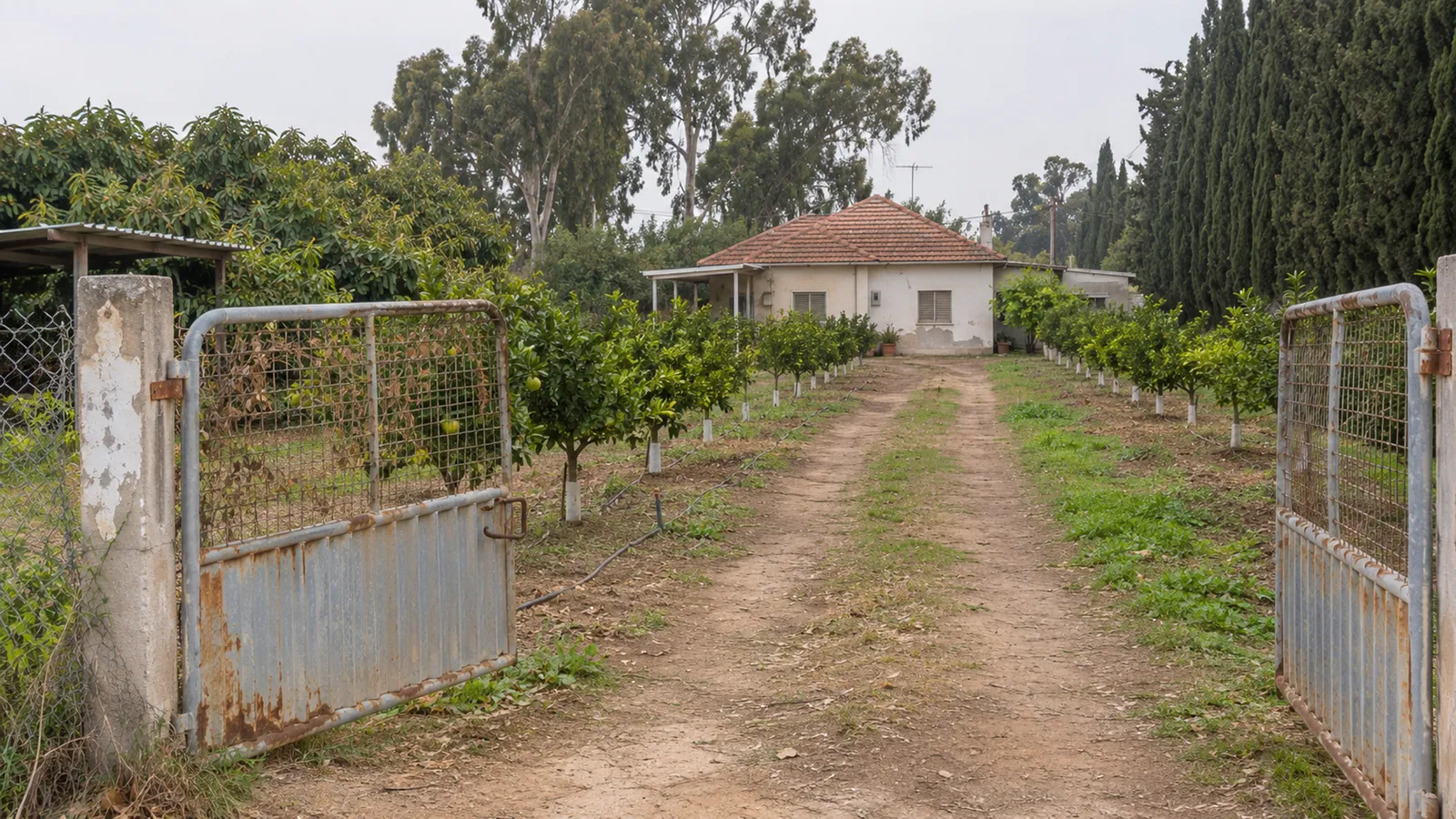
A nahala (נחלה) is agricultural land in a moshav, of a size set by the Minister of Agriculture, intended for a settler's home and livelihood from the farm. Where the land is Israel Lands (state-administered land), the holder has it as a lessee or a licensee, not as an owner, and the rights are governed by the decisions of the Israel Land Council, the contract with the Israel Land Authority (Rashut Mekarkei Yisrael, RMI) and the bylaws of the moshav's cooperative association. This guide reflects the Council's decisions compendium as in force from 4 August 2026.
What is a nahala made of: chelka alef, the residential plot and the farmland
The compendium defines its parts as follows:
- Chelka alef (plot A) – a continuous area zoned for residence, farm buildings and cultivation by the holder of the rights.
- Chelkat hamegurim (the residential plot) – as a rule, a continuous area within chelka alef of up to 2.5 dunams (the dunam is Israel's land unit), zoned for residence in the plan and containing the existing housing units; in cases set in the decisions, the arrangement can also be applied to an additional area, on separate terms and for a separate payment.
- Chelka bet and chelka gimel (plots B and C) – areas for agricultural use only: plot B by the holder, plot C jointly by the association.
A nahala is transferred as a single farm unit, and the lease right in chelka alef does not pass without the right to use the rest of the nahala. However, a residential lot can be split off it, on conditions set in the Council's decisions and subject to a planning scheme.
Who owns the land, and what is the lease from the Israel Land Authority?
Under the Council's decisions, agricultural land is allocated by lease only. The mishbetzet is the land rented or leased to the association, or held by it as a licensee, on nahala terms and subject to the definition in the decisions compendium. In the compendium's long-lease framework (chachira ledorot), chelka alef is leased directly to the holder for four renewable periods of 49 years each, and the remaining plots are leased to the association while preserving the holders' rights. Signing requires that the plots be registered in the Land Registry as separate registration units and that the uses on the nahala be regularised.
What is the difference between a bar reshut and a lessee under a long lease?
In a moshav where long leases have not yet been signed, the mishbetzet is held under temporary, renewable rental agreements: a two-party agreement between RMI and the association, or a three-party agreement that also includes the Jewish Agency or the World Zionist Organization as the settling institution. In many cases a holder in that situation is a bar reshut (licensee), by virtue of the mishbetzet agreement and the permission given to him; however, his exact status has to be determined from the contracts and rights documents of the nahala. The decisions compendium also distinguishes a tenant under temporary, renewable agreements, so not every absence of a personal contract amounts to the status of a bar reshut.
The compendium treats as a lessee both a bar reshut in a nahala and a person recorded as the holder of the rights at RMI and in the moshav's books. The difference lies in the source of the right: the mishbetzet agreement and the records of RMI and the association, as against a personal contract with RMI for chelka alef.
Who is the right-holder, and what is the role of the cooperative association?
The association (agudah) is a cooperative society classified as a moshav ovdim (workers' moshav) or a kfar shitufi (cooperative village). As a rule, the association's framework is preserved, but a holder of rights in a nahala may end his membership of it without that in itself cancelling his rights in the nahala, subject to settling his relations with the association. Several rules follow:
- RMI approves a transfer of rights in a nahala only to a person the association has approved in writing. In exceptional cases it may act without the association's consent, if it considers that the refusal rests on unreasonable grounds and after the association has had an opportunity to explain.
- According to RMI's service page, rights in a nahala can be transferred only to one person or to a couple.
- A lessee and the family members of the lessee's household may not hold more than one nahala on Israel Lands.
- The lessee must live in the nahala and cultivate it regularly and continuously.
What can be built on a nahala?
Residential building is allowed only in the area of chelka alef zoned for residence, and subject to the planning scheme that applies to the nahala. There are two tracks:
- Without joining the arrangement for anchoring residential rights – a housing unit for the holder, a second unit for the continuing generation and a third unit for the third generation can be approved, subject to the plan, a building permit and RMI's conditions; the third unit requires three generations actually living there and further conditions concerning the family's make-up and the rights of the older generation. RMI charges nothing for building of up to 160 m² gross in each of the first two units and up to 55 m² in the third.
- Under the anchoring arrangement (Part 7 of sub-chapter 8.3) – joining the arrangement gives a basic residential building scope of up to 375 m², subject to the plan, against a payment of 3.75% of the land value of the residential plot with the basic building scope; the payment removes the requirement of generational continuity, but does not in itself give all the existing and future building rights. All residential rights in low-rise construction in the residential plot, existing and future, can also be purchased from RMI for a purchase fee (dmei rechisha) at the full rate of 33% plus VAT as required by law, subject to discounts and reductions; in every case, building requires a suitable plan and a lawful building permit.
How does buying a nahala differ from buying an ordinary house?
- Approvals – the transaction requires RMI's prior written consent and the association's approval of the buyer.
- Payments to RMI on transfer – as a rule, on the sale of a nahala the seller must pay purchase fees, or a completion of purchase fees, for the residential plot, plus consent fees (dmei haskama) for the rest of the agricultural land. The full purchase fee rate is 33%, plus VAT as required by law, subject to past payments, reductions, regional discounts and the exemptions that apply in the particular case. A transfer to a relative, to a former spouse under a court judgment, or by inheritance does not count as a transfer of rights for this purpose.
- Rezoning – if a plan changing the zoning of the land is approved, RMI may end the lease for the rezoned part, against compensation. A holder who has joined the anchoring arrangement is not subject to this provision in the residential plot.
- Inheritance – as a rule, a nahala cannot be registered in the names of several heirs who are not a couple; who receives the rights and how they pass are determined by the nahala's contracts, the inheritance provisions and the applicable procedures, and sometimes an arrangement among the heirs is needed.
- Foreign buyers – under the Israel Lands Law, transferring rights in Israel Lands to a person who is neither an Israeli citizen or resident nor entitled to immigrate under the Law of Return requires approval.
The status of a particular nahala – the type of contract, the state of registration and the uses – appears in the documents of RMI and the association, not in the general rules.